
Photos freeze a single fraction of a second while video sweeps viewers through unfolding moments. It seems simple enough but did you know that over 90 percent of information processed by the brain is visual and how we capture that information changes everything? Most people think choosing between a camera or a video recorder only matters for gearheads but it actually decides how memories are experienced long after the moment has passed.
Table of Contents
- What Are Videography And Photography?
- Why The Difference Matters In Visual Storytelling
- How Equipment Impacts Videography And Photography
- Key Techniques Unique To Videography And Photography
- Real-World Applications And Considerations In Ohio
Quick Summary
| Takeaway | Explanation |
|---|---|
| Photography captures single moments. | Photography preserves a precise instant, emphasizing emotion and composition within a single frame. |
| Videography tells evolving stories. | Videography uses continuous motion and sound to capture narrative flows and complex interactions over time. |
| Different equipment shapes each medium. | Cameras for photography focus on resolution, while videography needs features for motion and sound integration. |
| Choose visuals based on context. | Selecting the right medium enhances storytelling tailored to specific events and communication goals. |
| Technical skills are essential for both. | Mastery of unique techniques is crucial in both disciplines to create compelling visual narratives. |
What are Videography and Photography?
Videography and photography are two distinct yet interconnected visual storytelling mediums that capture moments and create lasting memories through different technical approaches. While both rely on visual imagery, they differ fundamentally in how they record and present experiences.
Visual Capture Methods
Photography represents a static moment frozen in time. Using a camera, photographers capture a single frame that preserves a precise instant with incredible detail. These images are characterized by their ability to document exact emotions, compositions, and lighting conditions within a fraction of a second.
Learn more about our visual storytelling techniques focuses on capturing nuanced moments across various settings. Whether documenting weddings, corporate events, or creative projects, our approach emphasizes technical precision and emotional depth.
Motion and Narrative Techniques
Videography introduces movement and temporal progression to visual storytelling. Unlike photography’s static images, videography captures sequences of moments, creating dynamic narratives that unfold over time. Videographers use cameras capable of recording continuous motion, allowing viewers to experience events with sound, movement, and contextual depth.
Key differences between these visual mediums include:
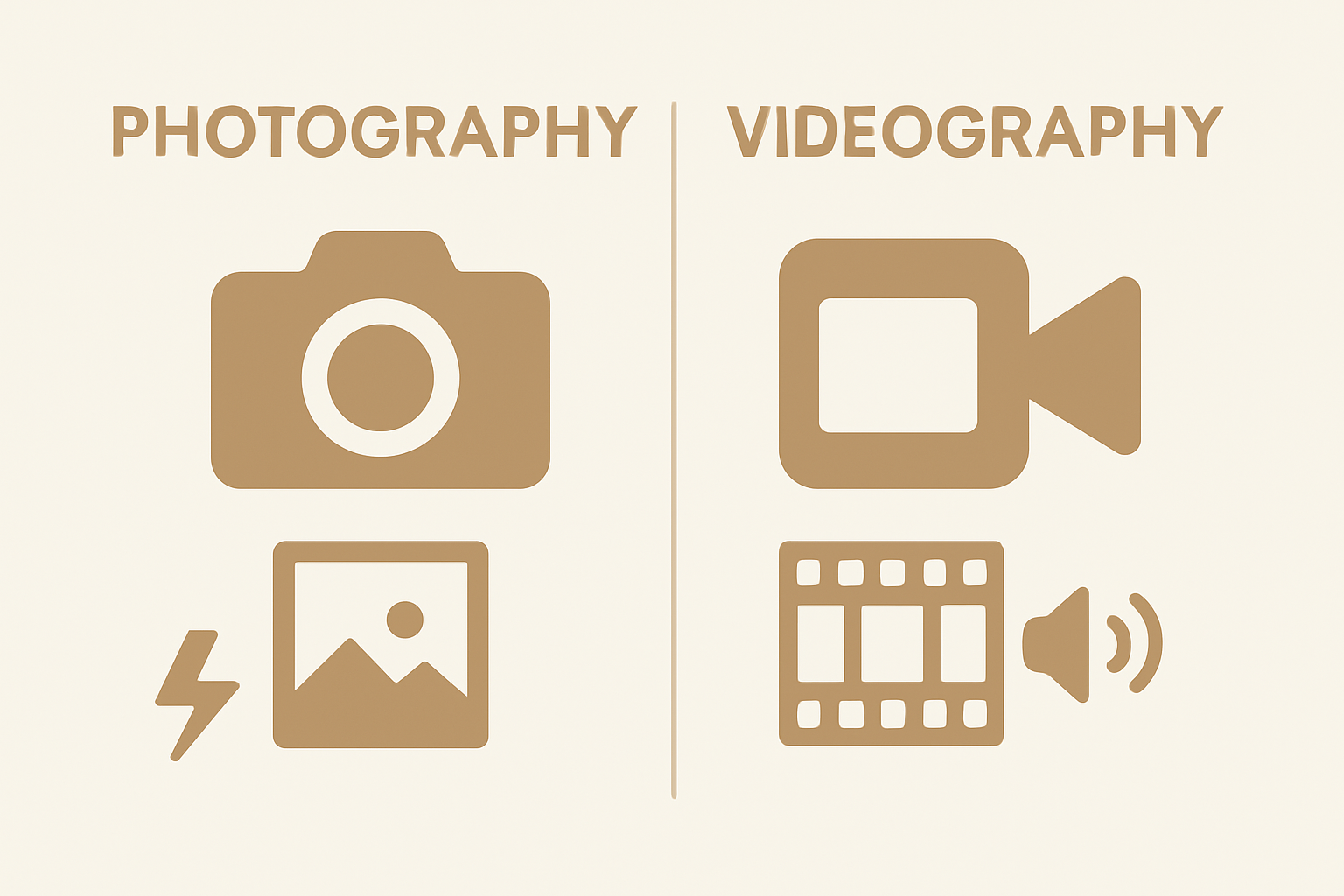
- Temporal Range: Photography captures a single moment, while videography presents an evolving story
- Technical Equipment: Different camera systems and lenses are used for each medium
- Storytelling Approach: Photography focuses on composition and instant, videography emphasizes narrative flow
Both disciplines require distinct skills, creative vision, and technical expertise. Understanding their unique characteristics helps clients choose the right visual medium for their specific communication and memory preservation needs.
Why the Difference Matters in Visual Storytelling
Understanding the nuanced differences between videography and photography transforms how we communicate, preserve memories, and share experiences. Each medium offers unique storytelling capabilities that can profoundly impact emotional resonance and narrative depth.
Emotional Impact and Memory Preservation
Photography captures concentrated emotional essence through a single, carefully composed frame. A still image allows viewers to pause and absorb intricate details impossible to perceive in fleeting motion. Wedding photographers, for instance, freeze moments of pure joy or subtle glances that represent entire emotional journeys.
Explore our storytelling strategies reveals how visual narratives transcend simple documentation. By understanding each medium’s strengths, creators can craft more compelling and meaningful visual experiences.
Contextual Storytelling Techniques
Videography introduces complex narrative layers through movement, sound, and temporal progression. Unlike photography’s static representation, video provides comprehensive context that reveals emotional evolution and interpersonal dynamics. Viewers experience not just moments, but the complete journey and surrounding atmosphere.
Key storytelling advantages include:
- Comprehensive Narrative: Video captures the entire emotional arc and surrounding environment
- Dynamic Interaction: Movement and sound create more immersive storytelling experiences
- Temporal Depth: Sequential moments reveal complex human interactions and emotions
Both mediums remain critical tools for communication. Businesses, individuals, and creative professionals leverage these techniques to convey messages, preserve memories, and connect with audiences through powerful visual narratives.
How Equipment Impacts Videography and Photography
The equipment used in videography and photography represents far more than simple tools. These technological platforms fundamentally shape how visual stories are conceived, captured, and communicated, transforming creative potential through sophisticated technological capabilities.
Camera Systems and Technical Specifications
Professional cameras for photography and videography share foundational similarities but diverge dramatically in operational design. Photography cameras prioritize sensor resolution, color depth, and instantaneous image capture. Videography cameras require additional features like continuous autofocus, enhanced low-light performance, and robust image stabilization mechanisms.
Discover our professional video production capabilities demonstrates how advanced equipment translates technical specifications into compelling visual narratives across diverse project requirements.
Specialized Lens and Accessory Considerations
Lens selection dramatically influences visual storytelling potential. Photographers typically use prime and zoom lenses optimized for precise framing and exceptional image quality. Videographers require lenses with smooth focus transitions, minimal distortion, and consistent performance across changing lighting conditions.
Critical equipment differences include:
- Sensor Technology: Photography sensors maximize static image quality, videography sensors prioritize motion rendering
- Recording Capabilities: Photography captures single frames, videography records continuous motion sequences
- Audio Integration: Videography equipment includes sophisticated sound recording mechanisms
Ultimately, understanding equipment nuances empowers creators to select the most appropriate technological approach for their specific storytelling objectives, ensuring maximum creative expression and technical excellence.
Key Techniques Unique to Videography and Photography
While both visual mediums share foundational creative principles, videography and photography employ dramatically different technical approaches to storytelling. Each discipline demands specialized skills and precise methodological execution that transform raw visual content into compelling narratives.
Compositional Strategy and Framing
Photography requires instantaneous compositional precision. Photographers meticulously arrange visual elements within a single frame, balancing light, color, perspective, and emotional resonance in milliseconds. Every detail matters, as there are no subsequent frames to provide context or correction.
Learn about our professional storytelling techniques illuminates how technical mastery translates into powerful visual communication across different mediums.
Dynamic Capture and Narrative Flow
Videography introduces movement as a fundamental storytelling component. Unlike photography’s static representation, videographers must anticipate and capture evolving moments, managing continuous motion, sound integration, and sequential emotional progression. This requires advanced skills in:
- Spatial Awareness: Tracking subject movement while maintaining compositional integrity
- Audio Synchronization: Capturing clean, contextual sound alongside visual imagery
- Temporal Storytelling: Creating narrative progression through sequential visual moments
Ultimately, both disciplines demand exceptional creative vision, technical expertise, and an intuitive understanding of human emotion and visual communication. Mastering these unique techniques allows creators to transform simple recordings into profound storytelling experiences.
Real-World Applications and Considerations in Ohio
Ohio represents a dynamic landscape where videography and photography intersect across multiple professional domains, showcasing the diverse storytelling potential of visual media. From corporate communications to personal celebrations, these visual techniques provide unique opportunities for meaningful communication.
Business and Professional Contexts
Corporate environments increasingly leverage both photography and videography to communicate complex narratives. Businesses utilize professional visual content to build brand identity, showcase product capabilities, and create compelling marketing materials. Photography provides crisp, immediate visual representations, while videography allows for more immersive storytelling that captures company culture and professional dynamics.
Explore professional video strategies reveals how businesses can transform their communication approaches through strategic visual storytelling.
Local Event and Personal Storytelling
Ohio’s diverse communities celebrate numerous events where visual documentation becomes critically important. Weddings, graduations, corporate events, and community gatherings represent opportunities to preserve memories through nuanced visual storytelling. Photographers capture precise emotional moments, while videographers document the complete narrative arc of significant life experiences.
Key considerations for visual storytelling include:
- Contextual Relevance: Selecting the right visual medium based on specific event requirements
- Technical Expertise: Understanding local production standards and audience expectations
- Emotional Authenticity: Capturing genuine moments that reflect true human experiences
Ultimately, Ohio’s rich professional and personal landscape demonstrates how photography and videography serve as powerful communication tools, transforming simple recordings into meaningful, lasting narratives.
Experience Visual Storytelling With Precision and Emotion
You have just explored how the unique features of videography and photography shape the way memories and messages are captured. The biggest challenge many face is deciding which medium brings their story to life, and ensuring those moments are preserved with both technical skill and heartfelt care. Whether you want the fleeting emotions of a wedding, the detailed storytelling for a business, or a celebration that deserves both movement and stillness, making the right choice can feel overwhelming.
Let Wondr Productions turn this knowledge into action for you. We offer approachable, professional video production services in Columbus and beyond, so you never have to compromise on quality or creativity—even for smaller projects. We focus on collaboration and authenticity, preserving details and atmosphere with an artist’s eye and expert technology. Ready to elevate your own story with unforgettable visuals? Connect with us today and let us help you choose the perfect storytelling approach for your event or project. Your memories deserve nothing less—reach out now to begin.
Frequently Asked Questions
What is the main difference between videography and photography?
Videography captures motion and tells dynamic stories through sequences of frames, while photography freezes individual moments in time as still images.
How does equipment differ between videography and photography?
Videography cameras are designed for continuous motion capture and often include features like audio integration and image stabilization, whereas photography cameras focus on sensor resolution and color depth for high-quality still images.
What are the storytelling strengths of photography?
Photography excels at capturing concentrated emotional moments with intricate details, allowing viewers to pause and reflect on a single impactful image.
In what scenarios should I use videography over photography?
Use videography for events that require a narrative flow, such as weddings or corporate presentations, where movement, sound, and emotional progression are important. Photography is ideal for capturing specific moments or portraits where detail is key.
